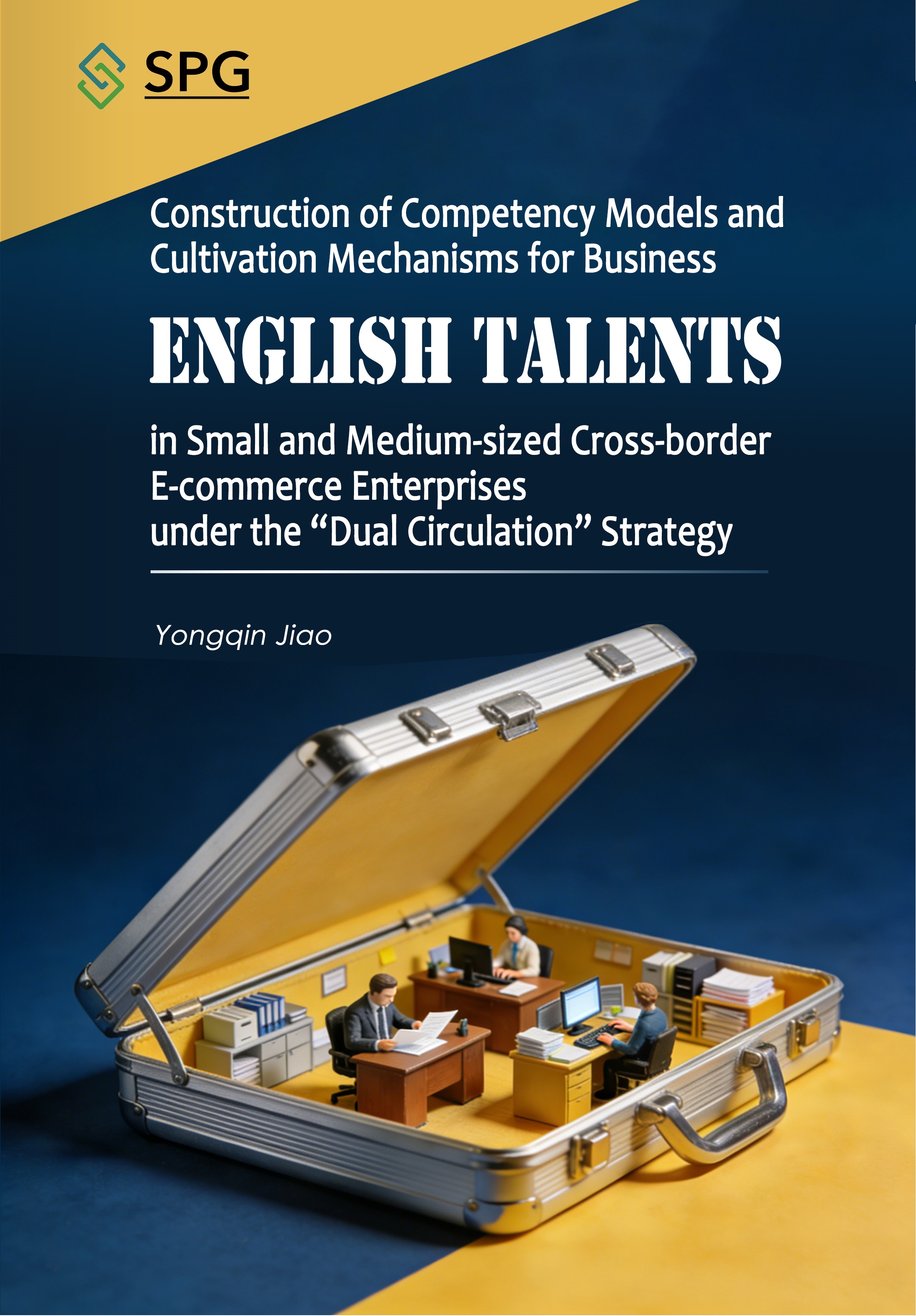
Construction of Competency Models and Cultivation Mechanisms for Business English Talents in Small and Medium-sized Cross-border E-commerce Enterprises under the “Dual Circulation” Strategy
Published Date: February 25th, 2026
Page Length: 349
Language: English
ISBN: 978-1-80053-535-0
Price: £35.90
Introduction
DOI: 10.38007/978-1-80053-535-0
Currently, the world is undergoing profound changes unseen in a century, and the process of globalization is advancing amidst twists and turns. China, standing at a new stage of development, has proposed a new development paradigm characterized by domestic circulation as the mainstay, and domestic and international dual circulations reinforcing each other. This not only serves as a strategic response to the profound changes in the external environment but also reflects an intrinsic requirement for promoting high-quality economic development. Against this macro backdrop, cross-border e-commerce, as a vital link connecting domestic and international markets and facilitating supply-demand matching, faces new opportunities and challenges. Particularly, the large number of flexible and agile small and medium-sized cross-border e-commerce enterprises have become indispensable and dynamic forces within the dual circulation development paradigm, yet they also confront great pressure for further transformation and upgrading.
Ultimately, competition among enterprises boils down to competition for talents. For small and medium-sized cross-border e-commerce companies deeply involved in international trade activities, the role of business English professionals has long transcended the traditional “linguistic bridge” function. They need to possess a comprehensive set of skills to conduct precise marketing in complex and volatile global markets, engage in cross-cultural business negotiations, manage international supply chains, handle overseas customer relationships, and address various risks. However, the reality is that many enterprises face challenges in “finding, utilizing effectively, and retaining” such kinds of talents. Meanwhile, the supply of talents from higher education institutions and vocational training systems often deviates from actual industry demands, with training models lagging behind industry practices.